
Overview
The Liberian National Coast Guard is the naval force of Liberia, part of the Armed Forces of Liberia as the naval component. Its main duties are law enforcement along Liberia’s coast and in its maritime area, and aiding those in distress and protection of Liberia’s territorial waters.
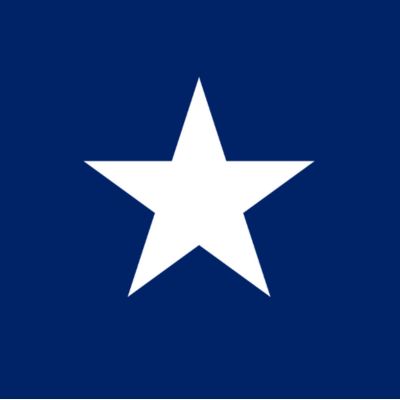
The Naval Jack of the Liberian National Coast Guard (LNCG) is the official maritime flag flown at the bow of commissioned vessels while in harbor. It represents the sovereign authority of the Republic of Liberia at sea and serves as a visible symbol of national maritime jurisdiction.
History
Liberia acquired a small number of naval ships during its early history. In 1892 the steel gunboat Gorronomah, built in Ireland, became its first ship, and in 1894 it acquired the gunboat Rocktown, built in the Netherlands. They were both out of service by 1900. In 1916 the auxiliary schooner President Howard was acquired from Germany and was the only ship in the Liberian Navy, but it was sunk in April 1918 by the German submarine U-154.
The Liberian National Coast Guard, was established in 1959. Throughout the Tubman period the coastguard was little more than a few sometimes unserviceable patrol craft manned by ill-trained personnel, though its training improved in the 1980s to the point where it was considered the best trained of the armed services.
In 1984 the Liberian National Coast Guard contained about 450 personnel. Under Samuel Doe the Coast Guard was retitled the Liberian Navy in 1986 through the passage of The Liberian Navy Act of 1986. However, as a result of the First and Second Liberian civil wars, the navy lost control of its bases and was reduced to an insignificant force.
The Coast Guard was reactivated on the 53rd Armed Forces Day on February 11, 2010, with an initial strength of 40 personnel who had been trained in the United States. A United States Coast Guard officer is now serving at the U.S. Embassy in Monrovia supporting efforts to reestablish the Liberian Coast Guard.
A detachment from SeaBee Naval Mobile Construction Battalion 7, based at Naval Station Rota, Spain, constructed a United States Africa Command-funded boat ramp and concrete perimeter wall for the Coast Guard, which was handed over in December 2010. In February 2011, the United States turned over two donated USCG Defender class boats to the Coast Guard.
Design Specification
The Naval Jack consists of:
- A white field (background)
- A blue canton positioned at the upper hoist (top left corner)
- A single white five-pointed star centered within the blue canton
The design mirrors the canton of the National Flag of Liberia, reinforcing national identity and historical continuity.
Symbolism
Each element of the Naval Jack carries national meaning:
- White field – Peace, integrity, and commitment to lawful maritime order
- Blue canton – Liberia’s presence within the African continent
- Single white star – Liberia as the first independent republic in Africa (1847)
Official Usage
The Naval Jack is:
- Flown at the bow of commissioned naval vessels while in port
- Lowered when the vessel is underway
- Displayed during official naval ceremonies and state maritime functions
Its use signifies active naval commission status and sovereign maritime authority.
Institutional Authority
The Naval Jack is used exclusively by:
- Armed Forces of Liberia
- Liberian National Coast Guard
The Coast Guard is tasked with:
- Maritime law enforcement
- Protection of Exclusive Economic Zone (EEZ)
- Anti-piracy operations
- Search and rescue operations
- Protection of offshore national assets
Credit source:
Armed Forces of Liberia – Official Military Structure & Insignia Documentation
Liberian Maritime Authority – National Maritime Identity Records
Smith, Whitney. Flags Through the Ages and Across the World – Flag Research Center
International vexillology reference archives